Learn the causes of a double chin and the best treatment options in Muscat, Oman, including weight loss, skin tightening, and non-surgical submental fat reduction.
A double chin is one of the most common lower-face concerns people notice when they look at their profile. It can affect adults of different ages and body types, and it is not always explained by body weight alone. In aesthetic medicine, this concern is often described as submental fullness, meaning fullness beneath the chin. Reviews on submental fullness note that it can be influenced by a mix of weight gain, genetics, and aging, while loose skin and changes in lower-face structure can also affect how prominent it looks. Cleveland Clinic likewise notes that some people inherit a softer jawline or have loose skin in the area even without obesity.
A double chin is not always caused by the same thing
One of the biggest mistakes people make is assuming a double chin is always just “fat.” In reality, submental fullness can reflect different underlying issues. For some patients, the main driver is excess body fat. For others, it may be genetic fat distribution, skin laxity with age, or a combination of both. Reviews on facial and neck aging also show that age-related changes in skin, fat, and deeper facial support can alter jawline definition over time.
That is why proper assessment matters. A patient with mainly submental fat may need a different approach than someone whose main issue is loose skin or lower-face laxity. In many cases, both concerns are present at once.
Common causes of a double chin
The most common contributors are usually overall weight gain, genetics, and aging. Weight gain can increase fat storage in the submental area, while genetics can influence where the body tends to store fat and how strong or soft the jawline naturally appears. Aging can also make the issue more visible because skin gradually loses firmness and the lower face and neck can lose definition over time.
Posture is worth mentioning carefully. Poor posture does not create submental fat by itself, but it can make the area look less defined and may accentuate an already soft jawline in some people. In practice, posture is better understood as something that can affect appearance rather than a primary cause of fat accumulation under the chin. This is an inference based on the better-established causes above.
Treatment depends on what is actually causing it
Because a double chin can come from more than one factor, treatment should be based on the dominant cause. If the main issue is overall body fat, then weight loss and metabolic improvement may reduce fullness in the area over time. If the main issue is moderate to severe submental fat that persists despite lifestyle efforts, non-surgical treatment may be considered. One FDA-approved option is deoxycholic acid injection, indicated for improvement in the appearance of moderate to severe fullness associated with submental fat in adults.
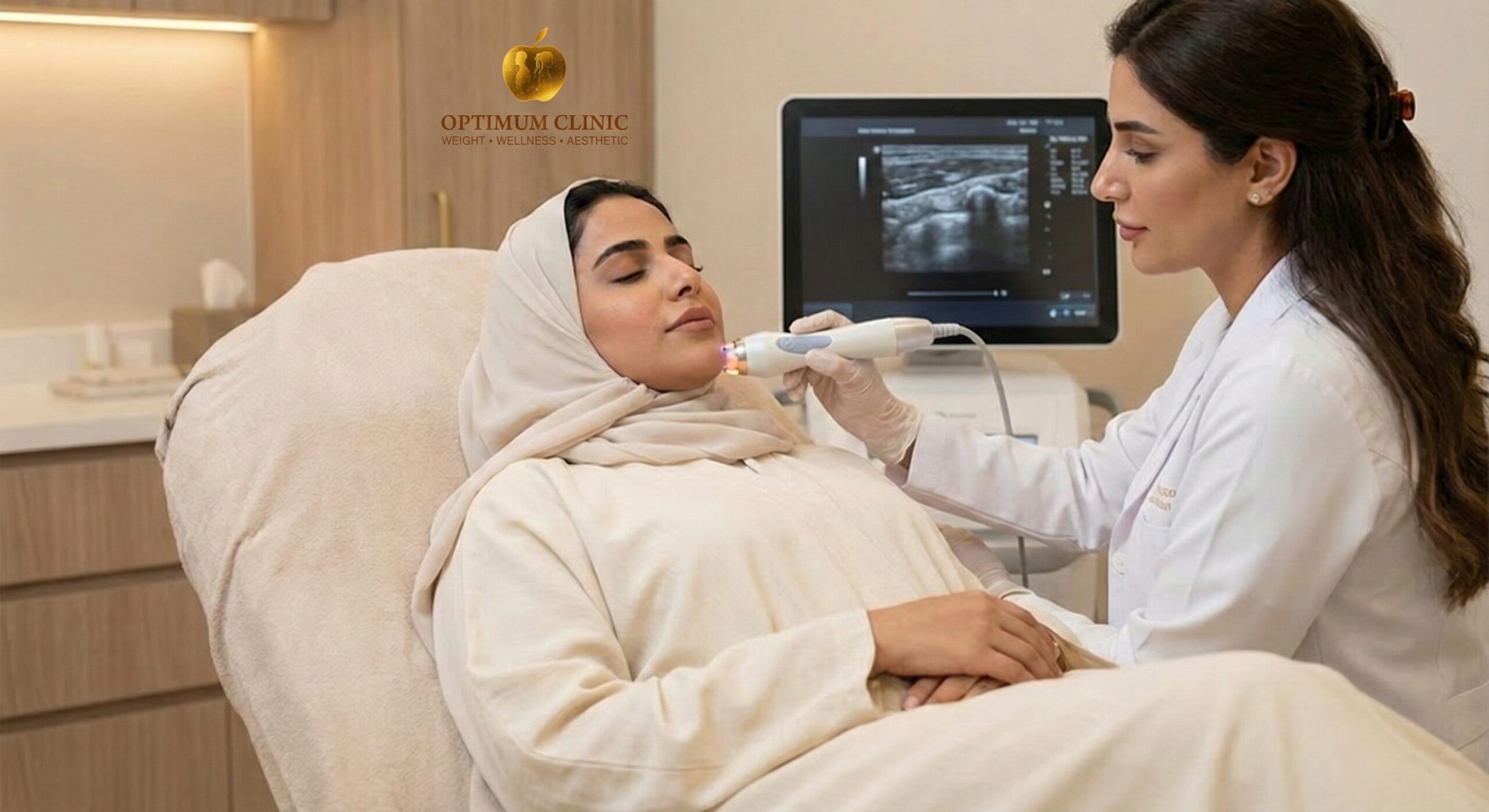
If skin laxity is a major part of the picture, tightening-based treatments may matter more than fat reduction alone. This is one reason why a double chin should not be treated as a single-category problem. Submental contour can be affected by both fat and skin quality, and the best plan depends on which issue is more important in that specific patient.
Lifestyle still plays an important role
Even when patients explore aesthetic treatment, lifestyle still matters. If excess body fat is contributing to the area, improving nutrition, activity levels, sleep, and overall weight management can support a better result. A more stable body composition can also help maintain facial and jawline definition over time. This is why double-chin treatment is often most effective when it is approached as part of a broader health and body-composition strategy rather than as an isolated cosmetic issue.
At Optimum, the goal is not just to “remove a double chin.” It is to assess facial structure, body composition, and skin quality so the plan is built around the real cause of the concern.
Final thoughts
When people search for double chin treatment in Muscat, Oman, the most important thing to understand is that a double chin is not always caused by the same issue. It may reflect submental fat, genetics, aging-related skin laxity, or a combination of factors. That is why the right treatment is not always just fat reduction. Sometimes the answer is overall weight management, sometimes it is targeted treatment of submental fullness, and sometimes skin tightening or a combined approach makes more sense.
A refined jawline starts with proper assessment. Once the real cause is identified, the treatment plan becomes much more effective.