Learn what an InBody scan can reveal beyond the scale in Muscat, Oman, including body fat, muscle mass, water balance, and visceral fat estimates.
Many people judge progress by one number: body weight. But a standard scale only tells you how heavy you are. It does not tell you how much of that weight is fat, how much is muscle, or whether your body composition is moving in the right direction. That is one reason major medical sources note that weight, BMI, and waist size do not fully capture body-fat distribution or health risk on their own.
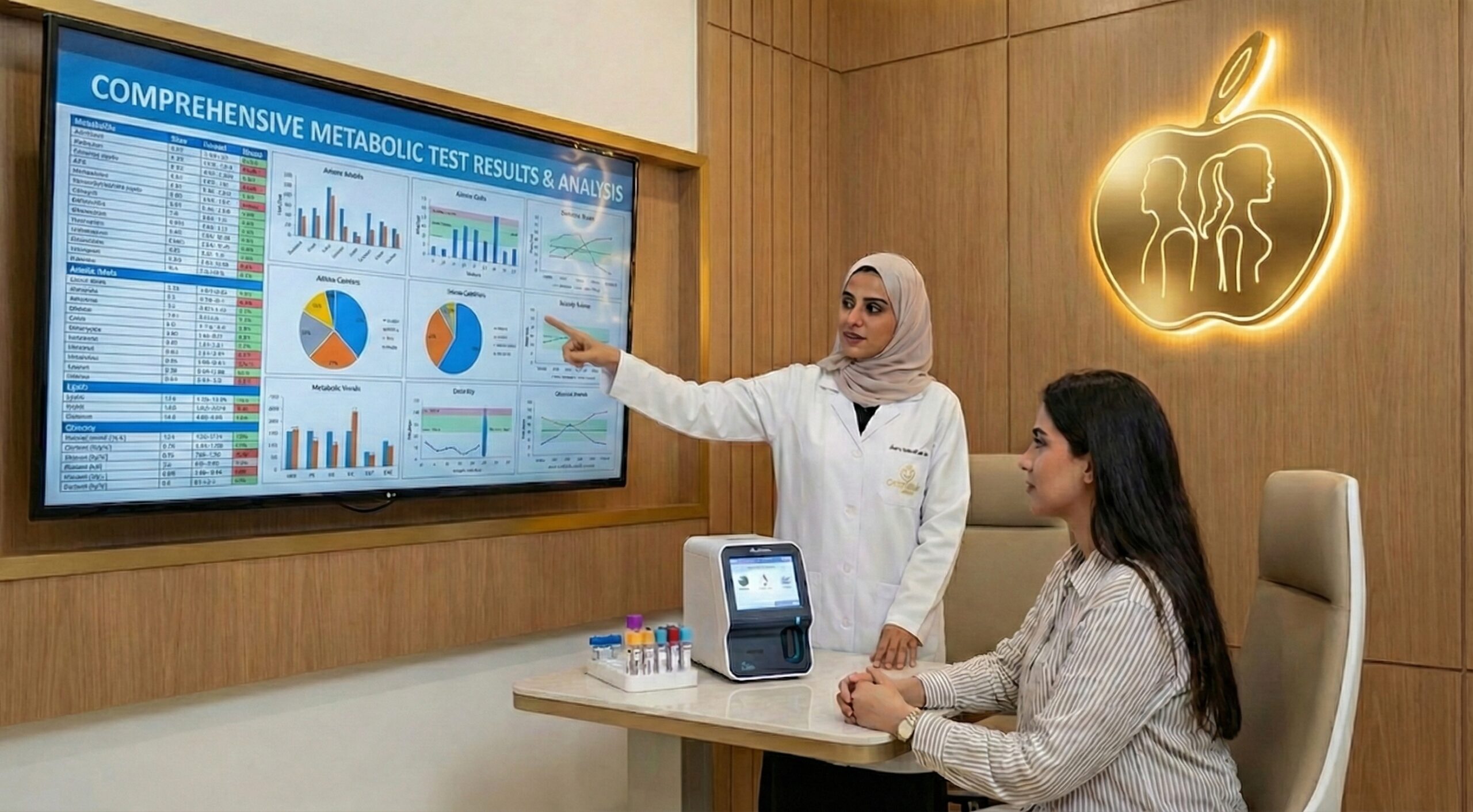
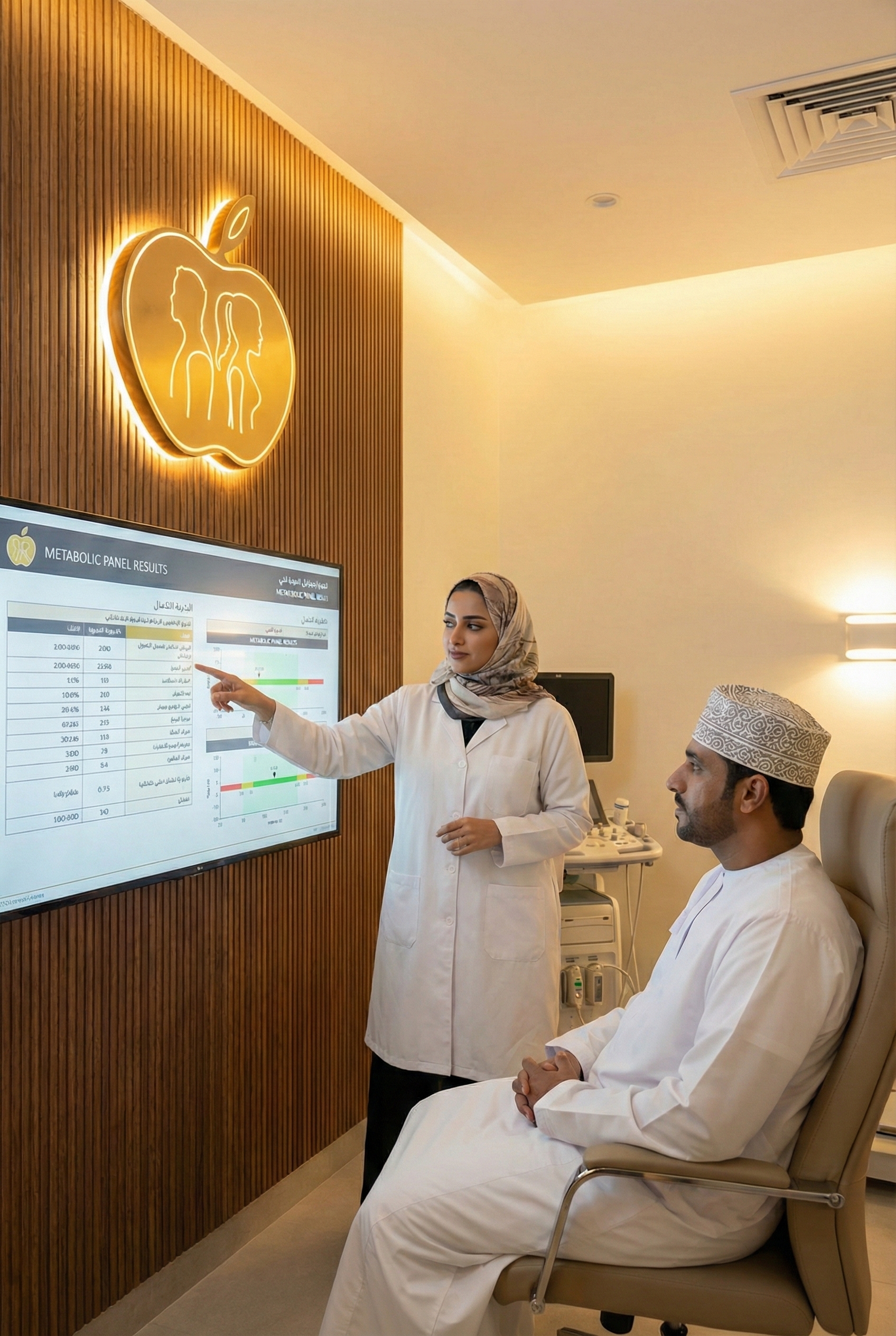
For patients exploring medical weight loss in Muscat, Oman, that difference matters. Two people can weigh exactly the same and still have very different amounts of body fat, lean mass, and metabolic risk. That is where a body composition scan such as InBody becomes useful: it adds context that the scale alone cannot provide. InBody describes its test as a body-composition analysis that reports measurements such as body fat, muscle distribution, and body-water balance.
A scale shows total weight, not what that weight is made of
The most important limitation of a regular scale is that it combines everything into one number. If your weight goes down, the scale cannot tell you whether you lost body fat, muscle, or water. If your weight stays the same, it also cannot show whether you actually improved your body composition by reducing fat while preserving or gaining lean mass. That is why body-composition analysis is often more informative than weight alone when the goal is better health or a better physical result.
An InBody scan helps break total body weight into components such as body fat mass, fat-free mass, total body water, protein, and minerals. That gives a much clearer picture of what is actually changing over time.
It helps show whether progress is fat loss, muscle change, or fluid shift
One of the biggest advantages of an InBody scan is that it helps distinguish between different types of change. That matters because “losing weight” is not always the same as improving body composition. In practice, many patients want to reduce body fat while preserving muscle, not simply become lighter at any cost. InBody states that its analyzers report muscle, fat, and water measurements, which helps make those distinctions more visible than a standard scale can.
This is especially useful in a medical weight-loss setting, because better long-term outcomes often depend on protecting lean mass while improving fat mass and metabolic health. A scale alone cannot show that.
It can provide a useful estimate of visceral fat
Another reason body-composition testing matters is visceral fat. Visceral fat refers to fat stored deeper in the abdominal area around internal organs, and higher visceral adiposity is associated with greater cardiometabolic risk, including insulin resistance and cardiovascular disease. Multiple reviews and studies have found that visceral adipose tissue is strongly linked to cardiometabolic abnormalities beyond what standard weight-based measures show.
It shows muscle distribution, not just total muscle
An InBody scan can also give segmental information, meaning it looks at different parts of the body rather than giving only one whole-body figure. InBody materials describe segmental analysis of the arms, legs, and trunk, which can help show how lean mass and body water are distributed across the body.
That can be helpful for patients focused on performance, muscle preservation, recovery, or symmetry. It also helps move the conversation beyond “I gained two kilos” or “I lost three kilos” and toward a more specific understanding of what those changes may actually mean.
It can be a better way to track real progress over time
For many patients, the real value of an InBody scan is not just the single result on one day. It is the ability to track changes over time in a more meaningful way. If body fat is decreasing, lean mass is being preserved, and body-water balance is staying stable, that tells a very different story from weight alone. That is why body-composition tracking can be especially useful in medical weight loss programs in Muscat, Oman, where the goal is not just a lower number, but a healthier and more sustainable result.
At the same time, consistency matters. Bioelectrical impedance results can be influenced by factors such as hydration, recent exercise, food intake, and the timing of the test, which is why manufacturers and researchers recommend testing under similar conditions when possible.
Final thoughts
When people search for an InBody scan in Muscat, Oman, what they usually want is a better understanding of their progress. That is exactly where the scan can be useful. A scale can tell you your total weight, but it cannot show how much of that weight is fat, how much is lean mass, how body water may be shifting, or whether your body composition is actually improving. An InBody scan adds that extra layer of detail.
The most important takeaway is simple: the number on the scale is only the beginning. A body-composition scan can help tell the rest of the story.